

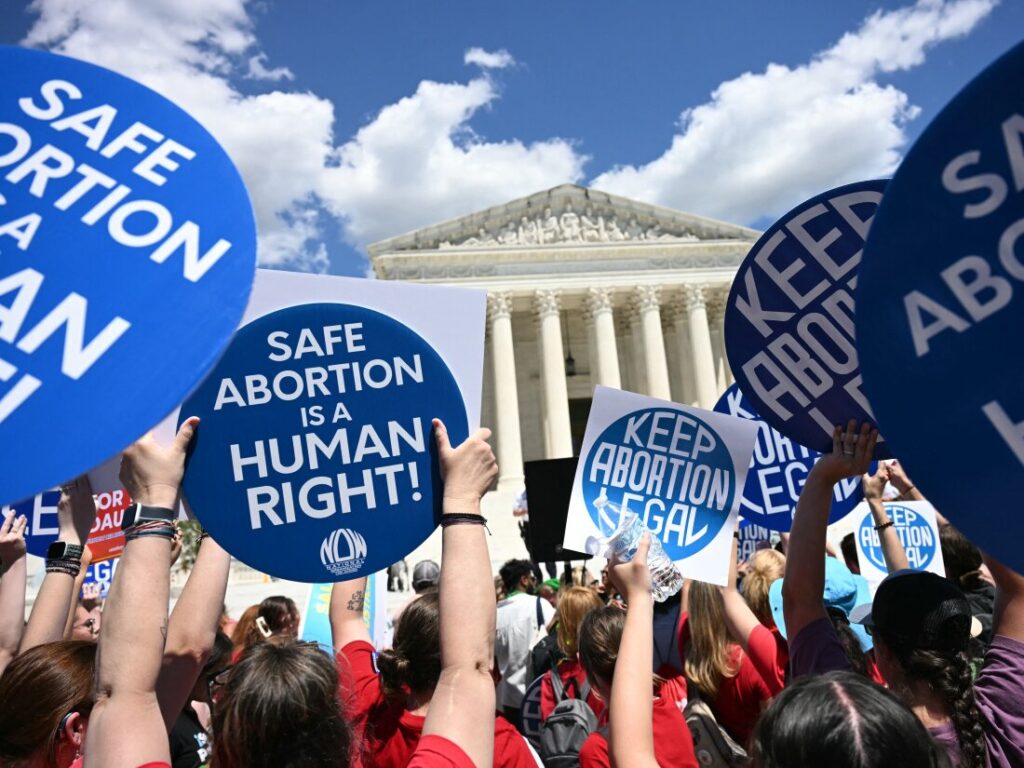
There has been recent discourse in the United States on issues surrounding abortion in the run up to their presidential elections, this would be an interesting time to review what the laws around abortion and access to reproductive care in India look like, and the historical context they originate up in. Women’s reproductive rights have faced setbacks in many of the states in the US post overturning of Roe v Wade in 2022; the recent amendments to the MTP Act in 2021 provide for an interesting comparison and food for thought.
Legislation regarding access to abortion is usually riddled with ethical and moral arguments from both sides, with conservative religious sects insisting on prenatal rights – the belief that the foetus is a living entity with rights bestowed as such. It is a long-standing debate trespassing into a variety of disciplines including, but not limited to, Law, Medical Science, and Philosophy. The debate cuts at questions like when does the foetus reach a stage to attain rights, what rights they may or may not be, and in a conflict between the foetal rights and rights of the women bearing the pregnancy, how are they weighed. It is the last point that is the most politically contentious today (even though the other two are no more resolved either.) Today, “Pro-Life” groups that believe that life begins at conception, thus as a consequence believe that wilful termination of pregnancy is equivalent to murder. There’s a spectrum of arguments that the Pro-Life groups advance ranging from theological debates to more philosophical arguments on the ethics of abortion. However, as the name suggests, they all converge to some degree of agreement that the act of abortion in most forms
“Pro-Choice” groups and proponents of abortion, too differ in their interpretation of prenatal rights, do unanimously converge that the mother should have the final choice with respect to terminating the pregnancy. The Roe v Wade judgement notably ruled that it does not extend the right of life to the foetus.
India, a developing country with a large population that considers itself religious (with as much as 85% of the population considering itself to be religious- would be expected to be grappling with a similar discourse.. Abortion tends to be a sensitive issue in religion. There’s no blanket statement that can be made, and there’s
However, since the 1970s, India seems to have chosen a bipartisan stance in favour of access to abortions (‘pro-choice’) and stood by the commitment since in policy. Abortions in India are primarily governed with the MTP – Medical Termination Of Pregnancy Act- was first conceived in 1971. The latest amendment itself is fairly progressive, allowing for abortions even up to the 20th week for all women, and the 24th week for special categories of patients. Globally, this is one the highest gestation limit – the most common global limit being 12 weeks.The 2021 amendment also preserves the confidentiality of women undergoing the procedure by criminalising breach of the patient’s confidentiality with a prison sentence extending up to 1 year. This is significant since the social taboo of getting an abortion is an obstacle women have to face. Preserving their identity, therefore, is necessary to safeguard them from societal backlash. Both the 1971 as well as the 2021 versions of the bill allow for termination of the pregnancy under contraceptive failure, however, the 2021 covers married and unmarried women alike whereas the 1971 Act limits itself to married women. Termination beyond the 20th week is permitted for patients who are survivors of rape, victims of incest and other vulnerable groups (differently abled women, minors, among others), and termination of pregnancy beyond 24th week is permissible if the foetus is expected to have substantial abnormalities. For a more detailed explainer on the latest amendments, we recommend you check out the explainer here.
While this marks a significant victory for reproductive rights, especially in a country that tends to have a hard time passing legislation which might face cultural or religious resistance, there’s still a lot to be cautious about. Abortion in India is further complicated with the incidence of female foeticide. One does therefore wonder if the progressive nature of the act is linked to sex-selective abortions rather than championing reproductive rights for women. The act also limits the access to abortions to government hospitals or centres approved by the government and requires the opinion(s) of one ‘registered medical practitioner’ up to the 20th week, and two registered medical practitioners if the termination takes place beyond the 20th week. Beyond the 24th week, the concurrence of a prescribed medical board is necessary. Though perhaps not meant to be restrictive but rather protective by itself, the lack of access to these centres as well as general lack of access to healthcare, qualified doctors, and fact-checked information stands to be an obstacle faced by women seeking abortion in India especially in the rural parts of the country. It is by the virtue of these physical and socio-economic constraints that women in India- particularly marginalised and impoverished women, find it hard to ask for their rights. It isn’t a story limited to reproductive care, but rights are only ever as real as they are accessible.
2 thoughts on “Reproductive Rights Across Borders: Comparing India’s Abortion Laws with the U.S. Post-Roe v. Wade”
Here’s a refined version:
“Excellent insight, worthy of debate. In my opinion, individuals should have the right to choose, but this freedom can also lead to pressured decisions, societal taboos, age-related dilemmas, and environmental concerns. Well-written, Tejas! Your ability to debone complex issues is impressive, especially considering your age. Few young individuals demonstrate such a keen interest and thoughtful perspective on these conflicts. Keep up the great work!”
“Excellent insight, worthy of debate. In my opinion, individuals should have the right to choose, but this freedom can also lead to pressured decisions, societal taboos, age-related dilemmas, and environmental concerns. Well-written, Tejas! Your ability to tackle complex issues is impressive, especially considering your age. Few young individuals demonstrate such a keen interest and thoughtful perspective on these conflicts. Keep up the great work!”