

TL; DR:
- In 1957, Portugal brought a case against India in ICJ seeking confirmation of its right of passage over Indian territory between Portuguese-controlled enclaves (Dadra and Nagar-Aveli). Portugal claimed that historical treaties granted it right of passage for civilian and military personnel. India contested this, asserting sovereignty and the right to control its territory. In November 1957, a first Judgment was delivered, relating to the jurisdiction of the court, which was challenged by India. However, a final Judgment in 1960 determined a limited right of civilian passage through Indian territory for Portugal, which meant that the right to passage for Portugal did not extend to military personnel like armed forces, police and/or ammunition.
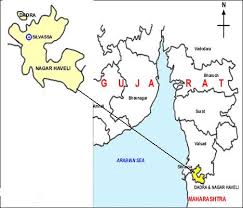
Facts: The prime dispute was caused by the colonial context set by Portugal’s control over various Indian territories since the 16th century. Portugal claimed that though the enclaves are geographically isolated within the Indian territory, their control over these enclaves and historical treaties and practices entitled Portugal to an unrestricted right of passage over these enclaves to connect its territories, including civilian and military personnel. However, following India’s independence in 1947, the political landscape in India changed drastically, as the new Indian government focussed on integrating all territories into the Indian Union, asserting sovereignty and its right to assert control over its territory. This led to tensions with Portuguese colonial claims.
Procedural History: Portugal initiated proceedings on December 22, 1955, by filing an application with the ICJ, asserting its rights to passage based on historical customs and practices.
In the preliminary objections by India, India responded with objections pertaining to the ICJ’s jurisdiction. India argued that Portugal had inadequately established its rights under international law, and questioned whether the court could adjudicate matters that involve territorial sovereignty.
On November 26, 1957, the ICJ ruled on India’s objections, by affirming its jurisdiction to hear the case under Article 36 (2) of the ICJ Statute, which allows for compulsory jurisdiction based on a mutual consent between the states.
Based on this ruling, the court proceeded with examining the merits of the case, wherein the hearings included extensive presentations from both parties regarding the historical evidence, treaties and customary practices.
The Main argument of Portugal was based on its claims on historical practices and treaties, wherein Portugal cited treaties and agreements that purportedly granted rights of passage through the Indian enclaves. Additionally, the Portuguese government also argued that there had been an established practice for allowing a passage during the British colonial rule and post-independence India.
The Main argument of India was that following its independence in 1947, it had the right to control its own territory, and asserted sovereignty to counter the claims of Portugal.
Issues:
- If the ICJ have jurisdiction over the case, based on both parties’ acceptance of its compulsory jurisdiction according to Article 36 (2),
- If there is a customary right of passage for Portugal over Indian territory because of its historical practices,
- If this right extended to military personnel or is limited to civilians,
- How should the court balance the established historical practices and customs with India’s territorial sovereignty?
Rule of Law
The ICJ’s judgment was grounded in the following foundational legal principles:
- State Sovereignty: The principle that each state has an exclusive sovereignty over its territory is fundamental to international law.
- Customary International Law: Rights can arise from long-standing practices and treaties which are accepted as binding, and can be recognized under international law as a customary right. However, their applicability must be assessed within modern contemporary legal frameworks.
- Jurisdiction: The ICJ has jurisdiction to hear cases between states on matters of international law when jurisdiction has been established by treaty or consent. In this case, it was by mutual consent from both parties.
- Sovereignty vs. Customary Rights: Sovereignty permits states to control their territory. However, customary rights can impose limits if they are proven to exist and are respected historically.
Holdings and Rationale:
- ICJ’s Jurisdiction Over the Case (Holding: YES)
Rationale: The ICJ determined that it had jurisdiction based on the nature of the claims, which were centered around international treaties and customary practices. The court found that because this dispute concerned the rights of passage under international law and not merely under domestic control, it was suitable for international adjudication. - Right of Passage for Civilians (Holding: YES)
Rationale: The ICJ analyzed historical treaties such as the Treaty of Poona (1779), which allowed for some degree of passage between the territories. Additionally, the court reviewed evidence showing consistent practice between Portugal and India over time concerning civilian access to Indian territory, thus resulting in the ICJ recognising the establishment of a customary right for civilian passage based on historical precedent. - Recognition of Right of Passage for Military and Official Personnel (Holding: NO)
Rationale: The ICJ acknowledged India’s sovereign rights over its territory, which allowed for a balanced decision between the sovereign rights and the customary rights to be formed. The ICJ found that though a precedent for civilian access was established, it did not explicitly grant military rights to Portugal.
Ruling: ICJ ruled in favor of a limited customary right of passage for Portuguese civilians, but it denied any right of passage for military or official personnel. As a result, it was able to come to a decision that encompasses and acknowledged both Portugal’s claims of historical precedence and India’s claims for sovereign rights and security concerns. The Right of Passage Over Indian Territory case was one of the first cases involving the balancing of historical practices with modern sovereignty, serving as an important point in the timeline of international customary law. The case also demonstrated the complexities that emerge from colonial legacies to international law, perhaps providing a better outlook in understanding other issues wherein historical practices intersect with modern sovereignty.
Bibliography
- Legal-Lore. (2022, August 10). CASE CONCERNING RIGHT OF PASSAGE OVER INDIAN TERRITORY (PORTUGAL v. INDIA). Legal-lore. https://www.legallore.info/post/case-concerning-right-of-passage-over-indian-territory-portugal-v-india
- Mundi, J. (n.d.). Right of Passage over Indian Territory (Portugal v. India), Judgment – Merits, 12 Apr 1960. https://jusmundi.com/en/document/decision/en-right-of-passage-over-indian-territory-portugal-v-india-judgment-merits-tuesday-12th-april-1960
- Periyasamy, N. (2016). SOURCES OF INTERNATIONAL LAW RIGHT OF PASSAGE OVER INDIAN TERRITORY CASE (Merits. www.academia.edu. https://www.academia.edu/24114593/SOURCES_OF_INTERNATIONAL_LAW_RIGHT_OF_PASSAGE_OVER_INDIAN_TERRITORY_CASE_Merits
- Right of Passage over Indian Territory (Portugal v. India). (n.d.). https://www.icj-cij.org/case/32
- Singh, P. (2014). India Before and After theRight of PassageCase. Asian Journal of International Law, 5(1), 176–208. https://doi.org/10.1017/s2044251314000071