

Facts
The Treaty on the Non-Proliferation of Nuclear Weapons (NPT), entered into force in 1970, and with 191 States party to it as of November 2025 (although the status of Democratic People’s Republic of Korea is contested owing to its 2003 announcement of withdrawal from the treaty), sets forth certain obligations for the States to perform while also forming the basis for several customary international law.
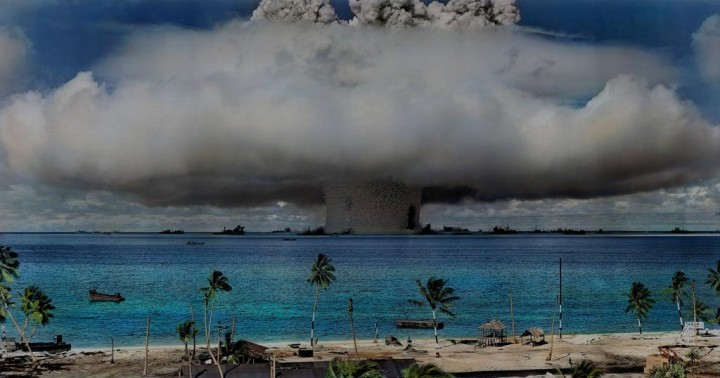
The Republic of Marshall Islands (RMI), situated in Oceania, was placed under the trusteeship of the United States of America (US) in 1947 which continued until termination of the trusteeship in 1990. During the twelve years from 1947 until 1958, sixty-seven nuclear explosion tests were carried out on the territory of RMI, which the 2012 Report of the Special Rapporteur to the Human RIghts Council has claimed to have lasting adverse impact on RMI1.
Against this backdrop of the obligations set forth by the NPT and the RMI’s encounter with nuclear testing, the Republic of the Marshall islands, on 14 April 2014, submitted nine applications to the International Court of Justice (ICJ or the Court) accusing States of the failure of the obligation of the “cessation of the nuclear arms race”2, identifying six respondent States who were requested to consent to the jurisdiction of the state — China, Democratic People’s Republic of Korea, France, Israel, Russian Federation, and United States of America — and three States who had recognised the compulsory jurisdiction of the ICJ through declarations (Art. 36(2), Statute) — India3, Pakistan4 and United Kingdom of Great Britain and Northern Ireland (UK)5.
Per Art.38(5), Rules, the applications filed against the six states were transmitted to them but not entered in the General List owing to the lack of consent6. With respect to the three cases entered in the General List, Marshall islands particularly recognised the United Kingdom to have violated Art.6 of the NPT while holding India and Pakistan (neither of whom have ratified the NPT) in breach of the obligations set forth by the NPT as a matter of customary international law7 as concluded erga omnes (toward all) by the Court in a preceding Advisory Opinion8.
Among the three Respondent States, India, Pakistan and the UK raised preliminary objections, which the Court considered vital to address before proceeding to review the merits of the case.
Upon examination, the Court finally ruled that it did not find basis for a dispute between the two States (the Applicant and the Respondent) in each case, and thus, lacking any jurisdiction could not proceed to review the merits.
Procedural history
- 14 April 2014: RMI files nine Applications with the ICJ.
- 28 April 2014: The Court invited the Applicant (RMI) and the Respondent (India) to meet with the President per Art.31 of the Rules of the Court.
- 6 June 2014: India sends a letter to the Court informing of its position in regards to RMI’s Application. India claims for no grounds for dispute to be present between the parties.
- 10 June 2014: India sent a letter expressing inability to meet the President for the meeting scheduled on 11 June 2014.
- 11 June 2014: Meeting between the President of the Court and representatives of RMI. 16 June 2014: The Court released its Order stating that the written pleadings shall first address the questions pertaining to the jurisdiction of the Court. The Order sets the timelines for submitting the Memorial and the Counter-Memorial by RMI and India, respectively.
- 16 Dec 2014: RMI submits the Memorial.
- 19 May 2015: Order of the Court extending India’s timeline for submitting the Counter-Memorial by three months.
- 16 September 2015: India submits its Counter-Memorial.
- 7 March 2016: Oral Proceedings 1 – RMI presents initial statements.
- 10 March 2016: Oral Proceedings 2 – India presents initial statements.
- 14 March 2016: Oral Proceedings 3 – RMI presents second round of statements. 16 March 2016: Oral Proceedings 4 – India presents second round of statements. 23 March 2016: Written reply of the Marshall Islands to the question put by Judge Cançado Trindade at the public sitting held on the morning of 16 March 2016.
- 23 March 2016: Written reply of India to the question put by Judge Cançado Trindade at the public sitting held on the morning of 16 March 2016.
- 29 March 2016: Comments of India on the written reply of the Marshall Islands to the question put by Judge Cançado Trindade at the public sitting held on the morning of 16 March 2016. 3 March 2016: Comments of the Marshall Islands on the written reply of India to the question put by Judge Cançado Trindade at the public sitting held on the morning of 16 March 2016. 5 October 2016: Judgement of the Case.
Main arguments
Per the Court’s Order of 16 June 2014, all written pleadings were to deal with the question of the jurisdiction of the Court in the case and not the merits of the proceedings; hence, all arguments made by the Applicant and Respondent States were in line with the same.
Republic of Marshall Islands
– RMI recounts the Court’s basis for definition of a dispute is the positive opposition to the claim of one party by the other while stating that the same may also be “inferred from the attitude taken by the other party in respect to such claim” for the Court has stated that the positive opposition need not necessarily be expressis verbis (in explicit terms). RMI cited several occasions where it has asked all States to fulfill obligations relating to cessation of nuclear arms race and nuclear disarmament including the UN High Level Meeting on Nuclear Disarmament on 26 September 2013 and the Second Conference on the Humanitarian Impact of Nuclear Weapons on 13 February 2014, to showcase that its public statements and public stance as clear evidence of dispute that the RMI raised with each State possessing nuclear weapons including India which was in attendance of the latter conference.9
– RMI showcases India’s conduct as grounds for inference of positive opposition of claims, and therefore, evidence of dispute. RMI states that despite India’s public statements affirming its commitment to a “nuclear weapon free”10 world, its conduct (in substance11) has been contrary as it continues to engage in a “course of conduct consisting of the quantitative build-up and qualitative improvement of its nuclear arsenal”12, with RMI’s application detailing India’s nuclear (development and expansions) programme plans.13
– RMI finally seeks to establish the existence of a dispute by virtue of India’s disagreement over RMI’s position of the customary international obligations that can be invoked against India, therefore requiring the Court to hear this dispute and rule on the requirements of customary international law (in particular reference to nuclear disarmament obligation on a non-NPT State). RMI references three cases to justify its argument:
– Certain Property (Liechtenstein v. Germany)14, where the Court observed that “ ‘[b]y virtue of this denial, there is a legal dispute’ between Liechtenstein and Germany;”15
– Application of the International Convention on the Elimination of All Forms of Racial Discrimination (Georgia v. Russian Federation)16, where the Court observed that “dispute must in principle exist at the time the Application is submitted to the Court;”17
– Land and Maritime Boundary between Cameroon and Nigeria (Cameroon v. Nigeria), I.C.J. Reports 1998; Application of the Convention on the Prevention and Punishment of the Crime of Genocide (Bosnia and Herzegovina v. Yugoslavia), I.C.J. Reports 1996 (II); Certain Property (Liechtenstein v. Germany), I.C.J. Reports 200518, where the Court “has accorded evidentiary value to the Parties’ statements before the Court for the purposes of determining the existence of a dispute.”19
Republic of India
– India stated that “whether there exists an international dispute is a matter for objective determination” by the Court, and that the existence of a dispute is the primary condition for the Court to exercise its judicial powers20. India first argued that the Applicant State failed to present evidence of a legal dispute between India and the latter at the time of the Application concerning fulfilment of customary international law obligations relating to the cessation of the nuclear arms race and nuclear disarmament. India states that while RMI recognised the need for “exchanges” between Parties to be present to constitute a dispute in its Memorial, RMI’s Oral arguments negated the same, while further noting that the Court had previously held that it needs to be ascertained if a genuine attempt to engage with other Party with a view to resolving disputed was undertaken21. India further cited the Permanent Court’s second Judgement22 and Art.43 of International Law Commission’s Articles on the Responsibility of States for Internationally Wrongful Acts23to argue for the requirement of an exchange. India stated that despite holding several bilateral exchanges prior to the Application being filed, the alleged dispute was never brought up in any discussion and that the statement made at the Nayarit conference was not tantamount to a dispute since both the Parties held the same stance regarding nuclear disarmament as RMI had acknowledged in its Application and Memorial24.
– India next argued that even if the Court were to find the dispute to exist, the Court would lack jurisdiction since all indispensable parties were not party to the proceedings. India claims that eight other States are absent from the proceedings (considering that the two consenting Parties are being subject to proceedings in separate cases), and that any decision of the Court would indicate an “evaluation of the lawfulness of the conduct” of the States not party to the case, where the Court not pass judgement despite erga omnes25. The complaint raised by RMI involves the negotiations of the absent states with each other and not in isolation26, implying participative nature of the other States in the subject-matter, and so the Court would have to first determine the conduct of the other States for deciding on the question of breach of obligations. Further to the point, India argues that the fulfillment of obligations laid down by the treaty requires an evaluation of how negotiations were conducted or could not be, and that attribution of failure to India could only be determined on examination of the conduct of the other States participating or obliged to participate in the negotiation. India thus references the Monetary Gold judgement of 1954 to state that the judgement cannot be made in the absence of indispensable Parties27.
– India raised four reservations to the jurisdiction of the Court under Art.36(2) as follows: –
Reservation 4: Owing to India’s presence in a “proliferated region” with the development of weaponry and nuclear capabilities in Asia having an impact on India’s national security28, India relies on the existence of nuclear weapons for self-defence and situations of hostility.29
– Reservation 5: Based on good faith governing the relation between States, India sought to prevent States from shying away from the jurisdiction of the Court in cases where India may bring against it while India could be “unfairly”30 sued at any moment by the State. As such, considering RMI deposited its declaration on 24 April 2013 and filed its application on 24 April 201431, India objects to the Court’s jurisdiction subject to the reservation.32
– Reservation 7: India argues that RMI’s application of the erga omnes principle to indict India’s alleged failure of fulfilling obligations, stems from the NPT, a multilateral convention, and thus requires the interpretation of the treaty. However, in this case, not all Parties to the treaty are present and so the reservation is brought against the Court’s jurisdiction.33
– Reservation 11: India, continuing to assert that the obligations arising from customary international law arise from the NPT, argues that its alleged failure to negotiate is tied to its non-acceptance of the NPT back in 1968 which was before the 1974 declaration and thus beyond the scope of jurisdiction which only applies to matters arising in the temporal period post the 1974 declaration. India, which refused to sign the NPT basis its alleged discriminatory nature34, has since then maintained its position on nuclear disarmament and thus objects to the Application filed by RMI since it believes to be referencing subject-matter beyond the scope of jurisdiction.35
– Finally, India argued that even if the Court were to find jurisdiction in the case, its judgement would have no practical consequences, for three reasons36:
– The issues under discussion relate to matters of national sovereignty and security for the States party to it and so, the judgement of the Court is unlikely to influence the policies of the State.
– The Court’s judgement, if found to have jurisdiction, would only have consequences on India by virtue of res judicata (a thing decided) although it is a matter requiring multilateral negotiations and cannot be negotiated by India on its own, as argued earlier.
– There may be no purpose or befitting scope to negotiations between RMI and India for India finds no dispute to exist between the two Parties .
Rule of Law
Treaty on the Non-Proliferation of Nuclear Weapons (NPT), 1 July 1968
– Preambulatory clause: Declaring their intention to achieve at the earliest possible date the cessation of the nuclear arms race and to undertake effective measures in the direction of nuclear disarmament
– Premabulatory clause: Desiring to further the easing of international tension and the strengthening of trust between States in order to facilitate the cessation of the manufacture of nuclear weapons, the liquidation of all their existing stockpiles, and the elimination from national arsenals of nuclear weapons and the means of their delivery pursuant to a Treaty on general and complete disarmament under strict and effective international control
– Article VI: Each of the Parties to the Treaty undertakes to pursue negotiations in good faith on effective measures relating to cessation of the nuclear arms race at an early date and to nuclear disarmament, and on a treaty on general and complete disarmament under strict and effective international control.
– Article IX, para 3: This Treaty shall enter into force after its ratification by the States, the Governments of which are designated Depositaries of the Treaty, and forty other States signatory to this Treaty and the deposit of their instruments of ratification. For the purposes of this Treaty, a nuclear-weapon State is one which has manufactured and exploded a nuclear weapon or other nuclear explosive device prior to 1 January 1967.
International Law Commission’s Articles on the Responsibility of States for Internationally Wrongful Acts, 10 August 2001
– Article 43: Notice of claim by an injured State
- An injured State which invokes the responsibility of another State shall give notice of its claim to that State.
- The injured State may specify in particular:
(a) the conduct that the responsible State should take in order to cease the wrongful act, if it is continuing;
(b) what form reparation should take in accordance with the provisions of part two.
–Article 44: Admissibility of claims
The responsibility of a State may not be invoked if:
(a) the claim is not brought in accordance with any applicable rule relating to the nationality of claims;
(b) the claim is one to which the rule of exhaustion of local remedies applies and any available and effective local remedy has not been exhausted.
Statute of the International Court of Justice, 26 June 1945
– Article 36, para 2: The states parties to the present Statute may at any time declare that they recognize as compulsory ipso facto and without special agreement, in relation to any other state accepting the same obligation, the jurisdiction of the Court in all legal disputes concerning: 1. the interpretation of a treaty;
- any question of international law;
- the existence of any fact which, if established, would constitute a breach of an international obligation;
- the nature or extent of the reparation to be made for the breach of an international obligation.
– Article 59: The decision of the Court has no binding force except between the parties and in respect of that particular case.
Rules of Court, 14 April 1978
– Article 31: In every case submitted to the Court, the President shall ascertain the views of the parties with regard to questions of procedure. For this purpose, the President shall summon the
agents of the parties for a meeting as soon as possible after their appointment, and whenever necessary thereafter.
– Article 38, para 5: When the applicant State proposes to found the jurisdiction of the Court upon a consent thereto yet to be given or manifested by the State against which such application is made, the application shall be transmitted to that State. It shall not however be entered in the General List, nor any action be taken in the proceedings, unless and until the State against which such application is made consents to the Court’s jurisdiction for the purposes of the case.
– Article 79, para 2: Where the Court so decides, the parties shall submit pleadings concerning jurisdiction or admissibility within the time-limits fixed, and in the order determined, by the Court. Each pleading shall contain the party’s observations and submissions, including any evidence on which it relies, and shall attach copies of supporting documents.
Issues
- a) If the Court had jurisdiction over the case
- b) If the Court could proceed to the merits of the case
- i) If customary international law obligations pertaining to nuclear disarmament could be extended to India
- ii) If India was in compliance with such obligations
Holdings & Rationale
- a) NO, by nine votes to seven, the Court lacks jurisdiction over the case due to absence of a dispute between the Parties.
- b) NO, by ten votes to six, the Court shall not proceed to the merits of the case due to lack of jurisdiction.
Ruling
The Court ruled that the first objection raised by India regarding the absence of a dispute between the Parties (Applicant, RMI, and Respondent, India) is to be upheld on four grounds: – the declarative statements made by RMI at the UN High Level Meeting on Nuclear Disarmament on 26 September 2013 and the Second Conference on the Humanitarian Impact of Nuclear; Weapons on 13 February 2014 failed to indicate positive opposition of claims specific to India – the cases cited by RMI to substantiate the claim of existence of dispute by virtue of filing of the Application and the statements made by Parties in evidence of opposition of views did not support the contention37;
– neither of the statements made by RMI in the multilateral context were particular to India in subject-matter or its conduct, and as such, basis those statements, it could not be concluded that India was aware or could not have been unaware of its breach of obligations and so, India’s conduct was not a basis for finding dispute between the States;
– a State’s vote on a resolution before a political organ containing a large number of propositions could not be taken to identify the State’s stance on each of those propositions, much less to find grounds for a dispute dealing with one of the propositions;
Hence, owing to the validity of the objection, per Art.36(2) of the Statute, the Court concluded that it did not have jurisdiction over the case. Consequently, the Court found no need to deal with the other objections raised by India since lack of jurisdiction had already been established. Further, owing to the lack of jurisdiction, the merits of the case would not be examined either.
Analysis and Criticisms
Due to objections raised and the consequent lack of jurisdiction, the Court was unable to consider and examine important questions on the customary international obligations of non-NPT states with respect to (negotiating on) nuclear disarmament. RMI cited customary international law for validating its argument; however, India’s stance maintained that it arose from a treaty that it was not a party to. Thus, the larger question of obligations presented by customary international law arising from NPT (as claimed by India) remains unexamined despite the Court remarking in an earlier Advisory Opinion, “In the long run, international law, and with it the stability of the international order which it is intended to govern, are bound to suffer from the continuing difference of views with regard to the legal status of weapons as deadly as nuclear weapons.”38
Case laws and jurisprudence have had immense weightage in the arguments raised by both the Parties in this case. India cited the Monetary Gold principle to justify the absence of indispensable parties and the consequent lack of jurisdiction, by bringing up the parties required for India to “pursue in good faith negotiations to cease the nuclear arms race at an early date”39for India could not negotiate with itself in isolation, and any such judgement with effect only on India would have no practical effect. RMI agreed that it is not a bilateral matter but that the erga omnes character of the alleged dispute does not render other parties indispensable and so contests the applicability of the Monetary Gold principle. RMI further argued that it does not expect the Court to exercise jurisdiction over States not party before the Court, and only to do so with respect to the alleged dispute between India and RMI, over which the Court has jurisdiction. RMI continued to substantiate its stance by stating that the responsibility of India exclusively is to be considered with respect to the alleged breach of obligation and the conduct of other States is irrelevant to the determination of the same.40 On the matter of the admissibility of the case, Judge Tomka’s Separate Opinion notes that “it is unrealistic to expect that a State will disarm unilaterally. International law does not impose such an obligation”41, “[t]he issues raised in the present proceedings are not of a bilateral nature between the Marshall Islands and India”42 and on the application of Monetary Gold principle “ It is rather a question of whether it is possible for the Court, in this context, to undertake consideration of a single State’s conduct without considering and understanding the positions taken by the other States with which that State (the Respondent in the case at hand) would need to have negotiated, and with which it would need to agree on the steps and measures to be taken by all concerned in order to achieve the overall goal of nuclear disarmament.”43 Thus, the question then squarely centers on the existence of a dispute between India and RMI.
RMI cited several case judgements and Court observations to showcase the existence of a dispute although the Court failed to consider them as valid parallels for this case citing difference in subject-matter, finding or context. Judge Tomka’s Separate Opinion reads that “it is not the emergence of a dispute which establishes the Court’s jurisdiction or perfects it” and that “[t]he disappearance of the dispute during the proceedings, either because the parties have reached a settlement or because of intervening circumstances, does not deprive the Court of its jurisdiction.”44In this case, the Court adopted a strict requirement of having the dispute to exist prior to the filling of the Application despite the Court on multiple occasions stating that “dispute must in principle exist at the time the Application is submitted to the Court”45 while Judge Sebutinde’s Separate Opinion notes that “when properly tested against the criteria well-established in the Court’s jurisprudence shows that a dispute did exist, albeit in a nascent form, between the Parties before the filing of the Application and that this dispute crystallized during the proceedings.”46
Judge Tomka further notes the departure of the Court from the flexibility historically witnessed in previous cases when considering matters of jurisdiction in favour of the formalistic approach.47 Judge Sebutinde expresses dissent over this “new rigorous and formalistic test of “awareness” that raises the evidentiary threshold and that is bound to present the Court with difficulties in future.”48 This formalistic and procedural unduly places the burden of proof on the Applicant to showcase “awareness”49 of the Respondent State of the matter of dispute between the parties unlike the finding of a dispute based on the positive opposition of claims “where there is in the first place a course of conduct by one of the parties to achieve its own interest, which the other party meets by a protest,”50 as elucidated by Judge Gaetano Morelli and quoted by Judge Sebutinde. This approach adopted by the Court thus “creates a difficulty for the very access to justice (by applicants) at international level, in a case on a matter of concern to the whole of humankind” as noted in the Dissenting Opinion of Judge Cançado Trindade.51 Judge Tomka’s Separate Opinion also reads that “ a State is not required, under international law, to give notice to another State of its intention to institute proceedings before the Court”52for the risk of a State depriving the Court of its jurisdiction by amending or withdrawing its declaration prior to the filing of the Application, with the Judge further commenting that “the conclusion that the Court has no jurisdiction in the absence of a dispute is not justified in the case at hand.”53
Conclusion
The judgement while introducing the subjective “awareness” marked a departure of the Court from the flexible approach it had taken since the presence of its predecessor to a formalistic and procedural approach that might increase inaccessibility to international adjudication and prove to be a hindrance within the international legal regime.
On the other hand, the Court noted that RMI, in this case, had “special reasons for concern” with respect to nuclear disarmament. This recognition might prove vital in shaping international customary law and its obligations which takes into account the practices of “specially affected states”54, increasing the scope of such states which previously only seemed to include States possessing nuclear weapons as suggested in the Court’s Advisory Opinion on the Use or Threat of the Use of Nuclear Weapons.
The larger inference to be drawn from this case is the limitation of the Court’s function, drawn from the traditional focus on bilateral disputes and lacking universal compulsory jurisdiction of all UN Member States, thus preventing the Court from achieving its purposes. Citing Judge Robinson’s Dissenting Opinion, “were I to consider the impact of another thousand obligations in the rest of my term, none would be, by virtue of the existential threat to mankind posed by nuclear weapons, as critically important for the work of the Court and the interests of the international community as the question of the obligation to pursue in good faith and bring to a conclusion negotiations leading to nuclear disarmament in all its aspects under strict and effective international control.”55In this case, the Court could not proceed to examine the merits of the case even if the grounds for dispute were found, owing to the absence of States inherent to the multilateral context.56
Footnotes
1 RMI’s written application versus India (clause 9); Report of the Special Rapporteur on the implications for human rights of the environmentally sound management and disposal of hazardous substances and wastes, Calin Georgescu ; Addendum, Mission to the Marshall Islands (27-30 March 2012) and the United States of America (24-27 April 2012), 3 September 2012, doc. A/HRC/21/48/Add.1.
2 Contents of the treaty reflecting the obligations are mentioned under Rule of Law, NPT
3 https://www.icj-cij.org/declarations/in
4 https://www.icj-cij.org/declarations/pk
5 https://www.icj-cij.org/declarations/gb
6 Only the People’s Republic of China notified the Court of its denial of consent. Other States provided no formal response. (quoted in the Memorial of RMI 16 Dec 2014, clause 5)
7 RMI’s written application versus India (section III.B. and section IV) justifies its position of contending the obligations of the NPT as customary international law including the Advisory Opinion of the Court on the Legality of the Threat or Use of Nuclear Weapons and President Bedjaoui’s declaration in Legality of Threat or Use of Nuclear Weapons, supra note 1. 8 Quoted in RMI’s written application versus India (clauses 39-40)
9 “By this unequivocal statement, made in the context of an international conference in which India participated, India was made aware that the RMI believed that its failure to seriously engage in multilateral negotiations amounted to a breach of its international obligations under customary international law. This public statement, as well as the overall position taken by the RMI on this issue over recent years, is clear evidence that the RMI had raised a dispute with each and every one of the States possessing nuclear weapons, including with India.” — para. 18, Memorial of Marshall Islands, 16 December 2014
10 Statement by H.E. Mr. Salman Khurshid, Minister of External Affairs of India, at the High Level Meeting of the General Assembly on Nuclear Disarmament, 68th United Nations General Assembly in New York, 26 September 2013, quoted in para. 37, RMI Application, 24 April 2014
11 “the substance is that India continues to engage in conduct that is contrary to its customary international legal obligation” — para. 19, Memorial of Marshall Islands, 16 December 2014; referencing the Court’s decision that the existence of a dispute is a matter of substance and not form (in Application of the International Convention on the Elimination of All Forms of Racial Discrimination (Georgia v. Russian Federation), Preliminary Objections, Judgment, I.C.J. Reports 2011 (I), p. 84, para. 30.) 12 para. 19, Memorial of Marshall Islands, 16 December 2014
13 para. 29-34, RMI Application, 24 April 2014; RMI later also brought up India’s nuclear testing during Oral proceedings 1 (7 March 2016) — The New Indian Express, “India Test Fires Nuke Capable of SLBM K-4 Secretly”, 9 Mar. 2016
14 Certain Property (Liechtenstein v. Germany), Preliminary Objections, Judgment, I.C.J. Reports 2005, p. 19, para. 25.
15 “To the same extent it may be said that in the present proceedings, complaints of law formulated by the RMI are denied by India and that therefore, by virtue of this denial, there is a legal dispute between the RMI and India.” — para. 22, Memorial of Marshall Islands, 16 December 2014
16 Application of the International Convention on the Elimination of All Forms of Racial Discrimination (Georgia v. Russian Federation), Preliminary Objections, Judgment, I.C.J. Reports 2011 (I), p. 85, para. 30; Questions relating to the Obligation to Prosecute or Extradite (Belgium v. Senegal), Judgment, I.C.J. Reports 2012, p. 442, para. 46.
17“the existence of the dispute as defined in the Application may also be evidenced by the positions of the parties before the Court” — para. 24, Memorial of Marshall Islands, 16 December 2014
18 Land and Maritime Boundary between Cameroon and Nigeria (Cameroon v. Nigeria), I.C.J. Reports 1998, p. 315, para. 93; Application of the Convention on the Prevention and Punishment of the Crime of Genocide (Bosnia and Herzegovina v. Yugoslavia), I.C.J. Reports 1996 (II), pp. 614- 615, para. 29; Certain Property (Liechtenstein v. Germany), I.C.J. Reports 2005, p. 19, para. 25.
19 para. 24, Memorial of Marshall Islands, 16 December 2014; “It may be concluded that the RMI and India, by their opposing statements and conduct both prior to and after the submission of the Application, have manifested the existence of a dispute over India’s non-compliance with its obligation to pursue in good faith, and bring to a conclusion, negotiations leading to nuclear disarmament in all its aspects under strict and effective international control” — para. 25, Memorial of Marshall Islands, 16 December 2014
20 Nuclear Tests (Australia v. France), Judgment, I.C.J. Reports 1974, pp. 270-271, para. 55; Nuclear Tests (New Zealand v. France), Judgment, I.C.J. Reports 1974, p. 476, para. 58.
21 Questions relating to the Obligation to Prosecute or Extradite (Belgium v. Senegal), Judgment, I.C.J. Reports 2012, 22 “before a dispute can be made the subject of an action at law, its subject matter should have been clearly defined by means of diplomatic negotiations” — Mavrommatis Palestine Concessions, Judgment No. 2, 1924, P.C.I.J., Series A, No. 2, p. 15. See also Right of Passage over Indian Territory (Portugal v. India), Preliminary Objections, Judgment, I.C.J. Reports 1957, pp. 148-149. 23 Referenced under Art.43 of Rule of Law; RMI rejected this argument citing Art.44 of the ILC (ILC articles are not concerned with questions of jurisdiction of international courts or admissibility of cases while further adding “there is nothing to prevent the notice of claim by the injured State being given not prior to seising the Court, but precisely by seising it” — quoted in Obligations concerning Negotiations relating to Cessation of the Nuclear Arms Race and to Nuclear Disarmament (Marshall Islands v. India), Jurisdiction and Admissibility, Judgment, I.C.J. Reports 2016.
16 Application of the International Convention on the Elimination of All Forms of Racial Discrimination (Georgia v. Russian Federation), Preliminary Objections, Judgment, I.C.J. Reports 2011 (I), p. 85, para. 30; Questions relating to the Obligation to Prosecute or Extradite (Belgium v. Senegal), Judgment, I.C.J. Reports 2012, p. 442, para. 46.
17“the existence of the dispute as defined in the Application may also be evidenced by the positions of the parties before the Court” — para. 24, Memorial of Marshall Islands, 16 December 2014
18 Land and Maritime Boundary between Cameroon and Nigeria (Cameroon v. Nigeria), I.C.J. Reports 1998, p. 315, para. 93; Application of the Convention on the Prevention and Punishment of the Crime of Genocide (Bosnia and Herzegovina v. Yugoslavia), I.C.J. Reports 1996 (II), pp. 614- 615, para. 29; Certain Property (Liechtenstein v. Germany), I.C.J. Reports 2005, p. 19, para. 25.
19 para. 24, Memorial of Marshall Islands, 16 December 2014; “It may be concluded that the RMI and India, by their opposing statements and conduct both prior to and after the submission of the Application, have manifested the existence of a dispute over India’s non-compliance with its obligation to pursue in good faith, and bring to a conclusion, negotiations leading to nuclear disarmament in all its aspects under strict and effective international control” — para. 25, Memorial of Marshall Islands, 16 December 2014
20 Nuclear Tests (Australia v. France), Judgment, I.C.J. Reports 1974, pp. 270-271, para. 55; Nuclear Tests (New Zealand v. France), Judgment, I.C.J. Reports 1974, p. 476, para. 58.
21 Questions relating to the Obligation to Prosecute or Extradite (Belgium v. Senegal), Judgment, I.C.J. Reports 2012, 22 “before a dispute can be made the subject of an action at law, its subject matter should have been clearly defined by means of diplomatic negotiations” — Mavrommatis Palestine Concessions, Judgment No. 2, 1924, P.C.I.J., Series A, No. 2, p. 15. See also Right of Passage over Indian Territory (Portugal v. India), Preliminary Objections, Judgment, I.C.J. Reports 1957, pp. 148-149. 23 Referenced under Art.43 of Rule of Law; RMI rejected this argument citing Art.44 of the ILC (ILC articles are not concerned with questions of jurisdiction of international courts or admissibility of cases while further adding “there is nothing to prevent the notice of claim by the injured State being given not prior to seising the Court, but precisely by seising it” — quoted in Obligations concerning Negotiations relating to Cessation of the Nuclear Arms Race and to Nuclear Disarmament (Marshall Islands v. India), Jurisdiction and Admissibility, Judgment, I.C.J. Reports 2016.
24 “This statement, made in February 2014, two months before the RMI filed its Application, is actually of no help to the RMI as the position of the parties at that conference regarding the need for nuclear disarmament actually coincided. Further, the RMI itself acknowledges, India has always been a strong supporter of the necessity of nuclear disarmament” — para. 12, Oral Proceedings of the Public Sitting, 10 March 2016.
25 East Timor (Portugal v. Australia), Judgment, I.C.J. Reports 1995, p. 102, para. 29.; In the East Timor case, the ICJ made it clear that:
“the erga omnes character of a norm and the rule of consent to jurisdiction are two different things. Whatever the nature of the obligations invoked, the Court could not rule on the lawfulness of the conduct of a State when its judgment would imply an evaluation of the lawfulness of the conduct of another State which is not a party to the case. Where this is so, the Court cannot act, even if the right in question is a right erga omnes.”
26 “One cannot negotiate on one’s own, Mr. President. India cannot negotiate with itself; in the absence of, at the very least, the other nuclear powers, the Marshall Islands’ Application is, at best, nugatory, or, at worst and this is undoubtedly the case abusive” — para. 20, Oral Proceedings of the Public Sitting, 10 March 2016.
27 Monetary Gold Removed from Rome in 1943 (Italy v. France, United Kingdom and United States of America), Preliminary Question, Judgment, I.C.J. Reports 1954, pp. 31-32.
28 “Nuclear weapons are an integral part of our national security and will remain so, pending the global elimination of all nuclear weapons on a universal, non-discriminatory basis” — Conference on Disarmament, CD/PV.1139, Final record of the 1139th plenary meeting on 29 May 2009, p. 8
29 “disputes relating to or connected with facts or situations of hostilities, armed conflicts, individual or collective actions taken in self-defence, resistance to aggression, fulfilment of obligations imposed by international bodies, and other similar or related acts, measures or situations in which India is, has been or may in future be involved” — reservation 4, Declaration accepting the compulsory jurisdiction of the Court, signed 15 September 1974
30 Paar. 67, Counter Memorial of India
31 RMI later argued that India’s reservation included the wording “less than 12 months” and that their filing could not be considered so
32 “disputes with regard to which any other party to a dispute has accepted the compulsory jurisdiction of the International Court of Justice exclusively for or in relation to the purposes of such dispute; or where the acceptance of the Court’s compulsory jurisdiction on behalf of a party to the dispute was deposited or ratified less than 12 months prior to the filing of the application bringing the dispute before the Court” — reservation 5, Declaration accepting the compulsory jurisdiction of the Court, signed 15 September 1974
33 “disputes concerning the interpretation or application of a multilateral treaty unless all the parties to the treaty are also parties to the case before the Court or Government of India specially agree to jurisdiction” — reservation 7, Declaration accepting the compulsory jurisdiction of the Court, signed 15 September 1974
34India could only be party to the NPT as a Non-Nuclear Weapon State since it did not qualify under Art.IX(3) of the NPT to be a Nuclear Weapon State
35 “disputes prior to the date of this declaration, including any dispute the foundations, reasons, facts, causes, origins, definitions, allegations or bases of which existed prior to this date, even if they are submitted or brought to the knowledge of the Court hereafter.” — reservation 11, Declaration accepting the compulsory jurisdiction of the Court, signed 15 September 1974
36 Para. 23, Oral Proceedings of the Public Sitting, 10 March 2016
37 Certain Property (Liechtenstein v. Germany), Preliminary Objections, Judgment, I.C.J. Reports 2005, p. 19, para. 25: the existence of a dispute was clearly referenced by bilateral exchanges between the parties prior to the date of the application Land and Maritime Boundary between Cameroon and Nigeria (Cameroon v. Nigeria), Preliminary Objections, Judgment, I.C.J. Reports 1998, p. 317, para. 93: the reference to subsequent materials in the Cameroon v. Nigeria case related to the scope of the dispute, not to its existence.
Application of the Convention on the Prevention and Punishment of the Crime of Genocide (Bosnia and Herzegovina v. Yugoslavia), Preliminary Objections, Judgment, I.C.J. Reports 1996 (II), p. 614, paras. 27-29: While the Court did not explicitly reference any evidence before the filing of the application demonstrating the existence of a dispute in its Judgment in this case, in the particular context of that case, which involved an ongoing armed conflict, the prior conduct of the parties was sufficient to establish the existence of a dispute.
Although statements made or claims advanced in or even subsequently to the application may be relevant for various purposes — notably in clarifying the scope of the dispute submitted — they cannot create a dispute de novo, one that does not already exist.
38 Legality of the Threat or Use of Nuclear Weapons, Advisory Opinion, I.C.J. Reports 1996 (I), pp. 263, paras. 98.
39 Para. 13, Memorial of RMI
40 Paras. 6-7, 10, 14, Oral Proceedings 3, 14 March 2016
41 Para. 35, Separate Opinion of Judge Tomka, RMI v. India
42 Para. 39, Separate Opinion of Judge Tomka, RMI v. India
43 Para. 38, Separate Opinion of Judge Tomka, RMI v. India
44 Para. 13, Separate Opinion of Judge Tomka, RMI v. India
45 Questions relating to the Obligation to Prosecute or Extradite (Belgium v. Senegal), Judgment, I.C.J. Reports 2012 (II), p. 442, para. 46, quoting Application of the International Convention on the Elimination of All Forms of Racial Discrimination (Georgia v. Russian Federation), Preliminary Objections, Judgment, I.C.J. Reports 2011 (I), p. 85, para. 30; emphasis added); Alleged Violations of Sovereign Rights and Maritime Spaces in the Caribbean Sea (Nicaragua v. Colombia), Preliminary Objections, Judgment, I.C.J. Reports 2016 (I), p. 61, para. 52; Application of the Convention on the Prevention and Punishment of the Crime of Genocide (Croatia v. Serbia), Preliminary Objections, Judgment, I.C.J. Reports 2008, p. 438, para. 80 and pp. 437-438, para. 79, quoting Application of the Convention on the Prevention and Punishment of the Crime of Genocide (Bosnia and Herzegovina v. Yugoslavia), Preliminary Objections, Judgment, I.C.J. Reports 1996 (II), p. 613, para. 26. — quoted in paras. 15-16, Separate Opinion of Judge Tomka, RMI v. India
46 Para. 13, Separate Opinion of Judge Sebutinde, RMI v. India
47 Paras. 18-22, Separate Opinion of Judge Tomka, RMI v. India
48 Para. 1, Separate Opinion of Judge Sebutinde, RMI v. India
49 Judge Robinson’s Dissenting Opinion notes “[t]he addition of awareness as a prerequisite for a finding of a dispute, on the other hand, is not a minor deviation, but represents a seismic change in what the Court requires before it will proceed to examine the merits of a claim” — para. 14, Dissenting Opinion of Judge Robinson, RMI v. India
50 South West Africa (Ethiopia v. South Africa; Liberia v. South Africa) Preliminary Objections, Judgment, I.C.J. Reports 1962; dissenting opinion of Judge Morelli, pp. 567, Part II, para. 2.
51 Para. 32, Dissenting Opinion of Judge Cançado Trindade, RMI v. India
52 Para. 29, Separate Opinion of Judge Tomka, RMI v. India
53 Para. 30, Separate Opinion of Judge Tomka, RMI v. India
54 Doctrine defined by the Court in North Sea Continental Shelj”, Jltdgment, I.C.J. Reports 1969, p. .3 — quoted in Heller, Kevin Jon. “Specially-Affected States and the Formation of Custom.” American Journal of International Law 112.2 (2018): 191–243.
55 Para. 2, Dissenting Opinion of Judge Robinson, RMI v. India
56 Para. 41, Separate Opinion of Judge Tomka, RMI v. India
Key case references
– Certain Property (Liechtenstein v. Germany), Preliminary Objections, Judgment, I.C.J. Reports 2005
– Land and Maritime Boundary between Cameroon and Nigeria (Cameroon v. Nigeria), Preliminary Objections, Judgment, I.C.J. Reports 1998
– Application of the Convention on the Prevention and Punishment of the Crime of Genocide (Bosnia and Herzegovina v. Yugoslavia), Preliminary Objections, Judgment, I.C.J. Reports 1996 (II)
– Application of the International Convention on the Elimination of All Forms of Racial Discrimination (Georgia v. Russian Federation), Preliminary Objections, Judgment, I.C.J. Reports 2011 (I)
– Mavrommatis Palestine Concessions, Judgment No. 2, 1924, P.C.I.J., Series A, No. 2 – Asylum (Colombia/Peru), Judgment, I.C.J. Reports 1950
– Legality of the Threat or Use of Nuclear Weapons, Advisory Opinion, I.C.J. Reports 1996 (I) and President Bedjaoui’s declaration in Legality of Threat or Use of Nuclear Weapons, supra note 1 – Fisheries Jurisdiction (Spain v. Canada), Jurisdiction of the Court, Judgment, I.C.J. Reports 1998 – East Timor (Portugal v. Australia), Judgment, I.C.J. Reports 1995
– Border and Transborder Armed Actions (Nicaragua v. Honduras), Jurisdiction and Admissibility, Judgment, I.C.J. Reports 1988
– Monetary Gold Removed from Rome in 1943 (Italy v. France, United Kingdom and United States of America), Preliminary Question, Judgment, I.C.J. Reports 1954
– I.C.J. Pleadings, Trial of Pakistani Prisoners of War, Application Instituting Proceedings (Pakistan v. India), 11 May 1973.
– Aegean Sea Continental Shelf (Greece v. Turkey), Judgment, I.C.J. Reports 1978 – Oil Platforms (Islamic Republic of Iran v. United States of America), Judgment, I.C.J. Reports 2003
– Certain Phosphate Lands in Nauru (Nauru v. Australia), Preliminary Objections, Judgment,I.C.J. Reports 1992
– Interpretation of Judgments Nos 7 and 8 (Factory of Chorzow), Judgment No. 11, 1927, P.C.I.J., Series A, No. 13
– Application for Revision and Interpretation of the Judgment of 24 February 1982 in the Case concerning the Continental Shelf (Tunisia v. Libyan Arab Jamahiriya), Judgment of 10 December 1985, I.C.J. Reports 198
– Nuclear Tests (Australia v. France), Judgment, I.C.J. Reports 1974, pp. 270-271, para. 55; Nuclear Tests (New Zealand v. France), Judgment, I.C.J. Reports 1974
References
Application Instituting Proceedings, Obligations concerning Negotiations relating to Cessation of the Nuclear Arms Race and to Nuclear Disarmament (Marshall Islands v. India), filed in the Registry of the Court on 24 April 2014
www.icj-cij.org/sites/default/files/case-related/158/158-20140424-APP-01-00-EN.pdf
Memorial of the Marshall Islands, Obligations concerning Negotiations relating to Cessation of the Nuclear Arms Race and to Nuclear Disarmament (Marshall Islands v. India), 16 December 2014 www.icj-cij.org/sites/default/files/case-related/158/158-20141216-WRI-01-00-EN.pdf
Obligations concerning Negotiations relating to Cessation of the Nuclear Arms Race and to Nuclear Disarmament (Marshall Islands v. India), Order of 16 June 2014, I.C.J. Reports 2014, p. 464 www.icj-cij.org/sites/default/files/case-related/158/158-20140616-ORD-01-00-EN.pdf
Counter-Memorial of the Republic Of India, Obligations concerning Negotiations relating to Cessation of the Nuclear Arms Race and to Nuclear Disarmament (Marshall Islands v. India), 16 September 2015 www.icj-cij.org/sites/default/files/case-related/158/18900.pdf
Obligations concerning Negotiations relating to Cessation of the Nuclear Arms Race and to Nuclear Disarmament (Marshall Islands v. India), Order of 19 May 2015, I.C.J. Reports 2015, p. 569 www.icj-cij.org/sites/default/files/case-related/158/158-20150519-ORD-01-00-EN.pdf
Public sitting held on Monday 7 March 2016, at 10 a.m., at the Peace Palace, President Abraham presiding, in the case regarding Obligations concerning Negotiations relating to Cessation of the Nuclear Arms Race and to Nuclear Disarmament (Marshall Islands v. India) www.icj-cij.org/sites/default/files/case-related/158/158-20160307-ORA-01-00-BI.pdf
Public sitting held on Monday 10 March 2016, at 10 a.m., at the Peace Palace, President Abraham presiding, in the case regarding Obligations concerning Negotiations relating to Cessation of the Nuclear Arms Race and to Nuclear Disarmament (Marshall Islands v. India)
www.icj-cij.org/sites/default/files/case-related/158/158-20160310-ORA-01-00-BI.pdf
(Bilingual translation) Public sitting held on Monday 10 March 2016, at 10 a.m., at the Peace Palace, President Abraham presiding, in the case regarding Obligations concerning Negotiations relating to Cessation of the Nuclear Arms Race and to Nuclear Disarmament (Marshall Islands v. India) www.icj-cij.org/sites/default/files/case-related/158/158-20160310-ORA-01-01-BI.pdf
Public sitting held on Monday 14 March 2016, at 10 a.m., at the Peace Palace, President Abraham presiding, in the case regarding Obligations concerning Negotiations relating to Cessation of the Nuclear Arms Race and to Nuclear Disarmament (Marshall Islands v. India)
www.icj-cij.org/sites/default/files/case-related/158/158-20160314-ORA-01-00-BI.pdf
Public sitting held on Monday 16 March 2016, at 10 a.m., at the Peace Palace, President Abraham presiding, in the case regarding Obligations concerning Negotiations relating to Cessation of the Nuclear Arms Race and to Nuclear Disarmament (Marshall Islands v. India)
www.icj-cij.org/sites/default/files/case-related/158/158-20160316-ORA-01-00-BI.pdf
Obligations concerning Negotiations relating to Cessation of the Nuclear Arms Race and to Nuclear Disarmament (Marshall Islands v. India), Jurisdiction and Admissibility, Judgment, I.C.J. Reports 2016, p. 255
www.icj-cij.org/sites/default/files/case-related/158/158-20161005-JUD-01-00-EN.pdf
Declaration of President Abraham, Obligations concerning Negotiations relating to Cessation of the Nuclear Arms Race and to Nuclear Disarmament (Marshall Islands v. India), 5 October 2016 www.icj-cij.org/sites/default/files/case-related/158/158-20161005-JUD-01-01-EN.pdf
Declaration of Vice-President Yusuf, Obligations concerning Negotiations relating to Cessation of the Nuclear Arms Race and to Nuclear Disarmament (Marshall Islands v. India), 5 October 2016 www.icj-cij.org/sites/default/files/case-related/158/158-20161005-JUD-01-02-EN.pdf
Separate Opinion of Judge Tomka, Obligations concerning Negotiations relating to Cessation of the Nuclear Arms Race and to Nuclear Disarmament (Marshall Islands v. India), 5 October 2016 www.icj-cij.org/sites/default/files/case-related/158/158-20161005-JUD-01-04-EN.pdf
Separate Opinion of Judge Sebutinde, Obligations concerning Negotiations relating to Cessation of the Nuclear Arms Race and to Nuclear Disarmament (Marshall Islands v. India), 5 October 2016 www.icj-cij.org/sites/default/files/case-related/158/158-20161005-JUD-01-10-EN.pdf
Dissenting Opinion of Judge Cançado Trindade, Obligations concerning Negotiations relating to Cessation of the Nuclear Arms Race and to Nuclear Disarmament (Marshall Islands v. India), 5 October 2016
www.icj-cij.org/sites/default/files/case-related/158/158-20161005-JUD-01-06-EN.pdf
Dissenting Opinion of Judge Robinson, Obligations concerning Negotiations relating to Cessation of the Nuclear Arms Race and to Nuclear Disarmament (Marshall Islands v. India), 5 October 2016 www.icj-cij.org/sites/default/files/case-related/158/158-20161005-JUD-01-12-EN.pdf
Legality of the Threat or Use of Nuclear Weapons, Advisory Opinion, 1. C.J. Reports 1996, p. 226 www.icj-cij.org/sites/default/files/case-related/95/095-19960708-ADV-01-00-EN.pdf
Treaty on the Non-Proliferation of Nuclear Weapons, 1968, United Nations Office for Disarmament Affairs.
https://treaties.unoda.org/t/npt
Responsibility of States for Internationally Wrongful Acts, Yearbook of the International Law Commission, 2001, vol. II (Part Two) (Text reproduced as it appears in the annex to General Assembly resolution 56/83 of 12 December 2001, and corrected by document A/56/49(Vol. I)/Corr.4.), 2001 legal.un.org/ilc/texts/instruments/english/draft_articles/9_6_2001.pdf
Charter of the United Nations and Statute of the International Court Of Justice, 1945 treaties.un.org/doc/source/docs/charter-all-lang.pdf
Rules of Court, International Court of Justice, 1978
www.icj-cij.org/rules
International Court of Justice. “Basis of the Court’s jurisdiction.” International Court of Justice. Date of Access: 16 November 2025.
www.icj-cij.org/basis-of-jurisdiction
North Sea Continental Shelj”, Jltdgment, I.C.J. Reports 1969, p. 3.
www.icj-cij.org/sites/default/files/case-related/52/052-19690220-JUD-01-00-EN.pdf
Heller, Kevin Jon. “Specially-Affected States and the Formation of Custom.” American Journal of International Law 112.2 (2018): 191–243.
www.cambridge.org/core/journals/american-journal-of-international-law/article/speciallyaffected-states-a nd-the-formation-of-custom/2279409A00C9EA0F7924022DC39F4AB8
Pederson, Nina Sofie and Brixey-Williams, Sebastian. “Analysis, Nuclear Arms Control And Disarmament: Implications of the Marshall Islands Case for nuclear disarmament.” BASIC, 10 Oct. 2016. basicint.org/news/2016/implications-marshall-islands-case-nuclear-disarmament
Ramkumar, Meenakshi and Aishwarya Singh. “The Nuclear Disarmament Cases: Is Formalistic Rigour in Establishing Jurisdiction Impeding Access to Justice?” Utrecht Journal of International and European Law 33 (2017): 128-134.
https://doi.org/10.5334/ujiel.422
Oxford Reference. (For latin legalese)
https://www.oxfordreference.com/